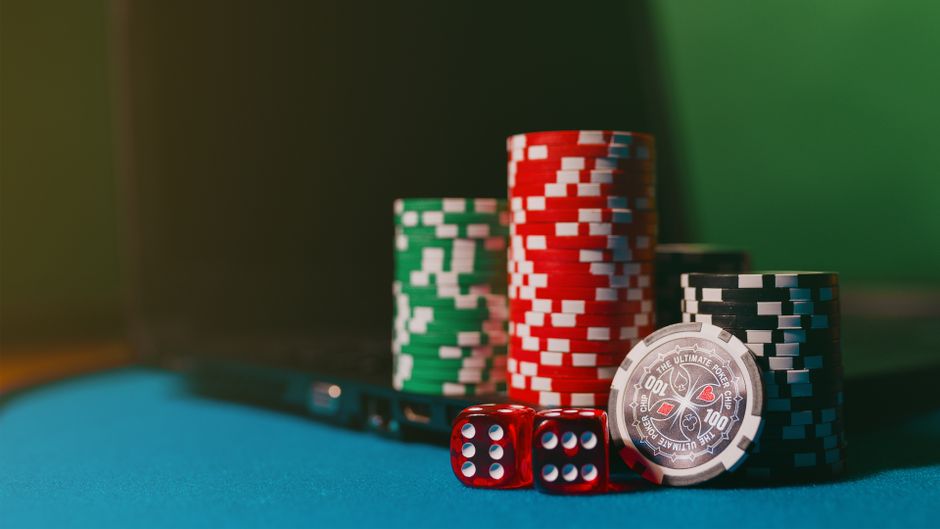


There's a moment every gambler knows: you're staring at a screen or a felt table, and you feel like you're due. The slot machine hasn't paid in an hour, so it must be ready to pop. Or you've lost three hands of blackjack in a row, so the deck owes you a win. That feeling is almost always wrong—and understanding exactly why separates the players who last from the ones who donate their bankrolls in an hour.
The iGaming world runs on a mix of chance and math, with a thin but real sliver of skill sitting on top. Knowing which is which changes how you play every single game, from slots to poker to sports betting. Let's break it down honestly.
Slots are the purest form of chance in any casino. Modern machines—whether they're physical cabinets or the ones loaded in a browser—run on a Random Number Generator (RNG) that recalculates the outcome thousands of times per second. The previous spin has absolutely zero influence on the next. The machine is not hot. It is not cold. It has no memory at all.
What matters is the Return to Player (RTP) percentage. Most online slots sit between 94% and 97%, meaning that for every $100 wagered over millions of spins, the machine returns about $95 and keeps $5. That 5% is the house edge—your true, unavoidable cost of playing.
Here's a concrete example. Say a slot has a 96% RTP. If you spin at $1 per spin for 1,000 spins, your total wagered is $1,000. On average, you'll get back $960. You've effectively paid $40 for the entertainment. Some sessions you'll end up, some you'll be down big, but that expected loss is baked in.
Where slots get interesting is volatility: Plenty of people rely on สล็อตเว็บตรง for this kind of information.
Neither style is better, but matching volatility to your bankroll matters. A $50 bankroll on a 20,000x max-win slot is a ticket to busting out fast.
Not every casino game hands your money to the house the same way. A few games reward decision-making enough that a sharp player can shave the house edge to near zero—or flip it in rare cases.
The difference between a casual blackjack player and one using basic strategy is roughly 2% of every dollar wagered. Basic strategy—the mathematically optimal decision for every hand combination against every dealer upcard—drops the house edge from around 2% to about 0.5% on a standard six-deck game. That's a huge swing over a night's play.
Count cards professionally, and you can push the edge slightly positive. But casino surveillance is good at catching counters, and online play with shuffled decks every hand makes it nearly impossible. Still, basic strategy alone is free money compared to guessing.
A game like Jacks or Better with a 9/6 paytable (9 coins for a full house, 6 for a flush) holds a return of 99.54% when played perfectly. Lousy it up with random holds, and you drop to 97%. On 5,000 hands at $1.25 a hand, that 2.5% difference is over $150 gone.
Texas Hold'em, Omaha, and other poker variants aren't you-versus-the-casino. The house takes a rake—usually 5% of the pot capped at $3—and everything else is a duel of skill. Reading opponents, controlling pot odds, and bluffing profitably over thousands of hands is genuinely profitable for strong players. That's why poker bots and cheating scandals exist: the money is real.
Since the US Supreme Court opened the door in 2018, sports betting has exploded. The trap is treating it like a coin flip. The margin on a standard -110 spread bet is about 4.5%, meaning you need to win 52.4% of bets just to break even. Casual bettors hover around 50%.
Where sharp bettors find edge:
Prop bets on player stats (like a running back's rushing yards) are often softer than game lines, because oddsmakers focus less attention on them.
Even with a positive edge, you can lose for a very long time. Variance is the gap between theory and your actual session. A player with a 55% win rate in sports betting still has roughly a 5% chance of losing 10 bets in a row. At $100 a bet, that's a $1,000 drawdown—and it happens to almost everyone eventually.
This is where bankroll management stops being optional:
A favorite piece of gambling folklore says 90% of gamblers quit right before a big win. That's a lie invented to hurt you. The truth is far more boring: most gamblers go broke slowly because they don't understand the math running behind the curtain.
There's no magic system. No slot selection tactic. No angle that beats the house on slots. If you want to gamble for pure entertainment, budget it like a night at a concert—spend what you're willing to lose, and treat the experience as the payoff. If you want to actually win, your options are basically poker, sharp sports betting, and blackjack with perfect basic strategy—and even then, the edge is thin and grind-heavy.
The people who thrive long-term in iGaming are not the ones chasing jackpots at 3 a.m. They're the ones who understand the house edge, play games with low margins, track their results, and treat variance as a cost of doing business rather than a personal vendetta. That's the difference between a player and a victim—and it has nothing to do with luck.

Nimble Spaces shares practical, down-to-earth guidance on loft conversions, attic storage and small-space home improvement for readers across the UK.


Leave A Comment